NEWS
ELEVEN XINJIANG WINERIES MADE COLLECTIVE DEBUT IN SINGAPORE
By Staff Reporter
25-11-2026
Source: Forestry and Grassland Administration of Xinjiang
Eleven boutique wineries from China's Xinjiang Autonomous Region made their collective Singapore debut from 19 to 20 November, presenting 68 labels across four distinct viticultural subregions to Southeast Asian sommeliers, importers and fine-wine collectors.
Dubbed "Xinjiang Wine: A World of Chinese Terroir", the event was organised by the Forestry and Grassland Administration of Xinjiang, together with campaign lead Up-Chinese Wine (UCW) and strategic partners Vinexpo Asia and Jin Ting Wan Chinese Restaurant. Its stated aim is to raise the regional identity of Xinjiang wine across Southeast Asia and to build an international trade platform bridging production and distribution of Xinjiang wines.
The programme ran across three invitation-only sessions. On 19 November, a wine pairing dinner at the Michelin-starred Jin Ting Wan restaurant overlooking Marina Bay matched one flagship vintage from each of the eleven wineries with bespoke Cantonese fine dining.
The restaurant's head sommelier, Joe Yang, winner of the 2026 Michelin Guide Singapore Sommelier Award, has been working to place Xinjiang vintages on the wine list.
On 20 November, Master of Wine Xing Wei led a regional masterclass on the viticultural evolution, macroclimates, soils and varietal profiles of Xinjiang's four main wine-producing zones, followed by a trade exhibition and walk-around tasting for sommeliers, distributors, restaurateurs, trade media and collectors. Of the 68 labels on show, 60 are domestic or international award winners.
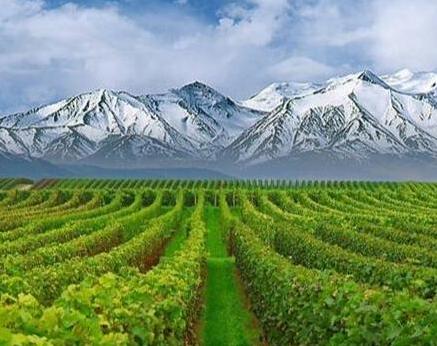
Fed by glacial snowmelt from the Tianshan Mountains, Xinjiang's vineyards span vast distances north and south of the mountain range, producing markedly different mesoclimates:
- Turpan-Hami Basin: an arid, high-heat continental climate suited to ripe, concentrated styles, represented by Puchang Vineyard.
- Yanqi Basin: naturally moderated by surrounding mountains and lake systems that temper seasonal extremes, home to Château Aroma, Tiansai Vineyards, Bainian Manor and Château Zhong Fei.
- Northern foothills of the Tianshan Mountains: Xinjiang's largest wine-producing cluster and a centre for modern, large-scale experimental viticulture, represented by Château Xianghai, Château Lixuan, Yaochixiye Winery and Tangting Xialu Winery.
- Ili River Valley: tempered by warm, humid Atlantic airflows for a distinctly different growing environment, represented by Silk Road Vineyards and Château Crescent.
Alongside the tastings, an official delegation from the Forestry and Grassland Administration conducted market research in Singapore, studying local consumption patterns, import regulations and distribution networks and meeting major importers, restaurant groups and trade associations to build long-term commercial partnerships.
The campaign casts Xinjiang as a region with more than 2,000 years of Silk Road viticulture, from ancient oasis kingdoms along the overland route to modern vineyards using clonal selection, terroir mapping and international winemaking technology.
(the writer can be contacted at: info@thewinechronicle.com)
ALL RIGHTS RESERVED
**IF YOU THINK THE WINE CHRONICLE IS WORTH SUPPORTING, PLEASE MAKE A DONATION TO HELP US IMPROVE AND CONTINUE OUR WORK**
TRENDING│ FOCUS│ MISSION│ ABOUT US│ CONTACT
|